


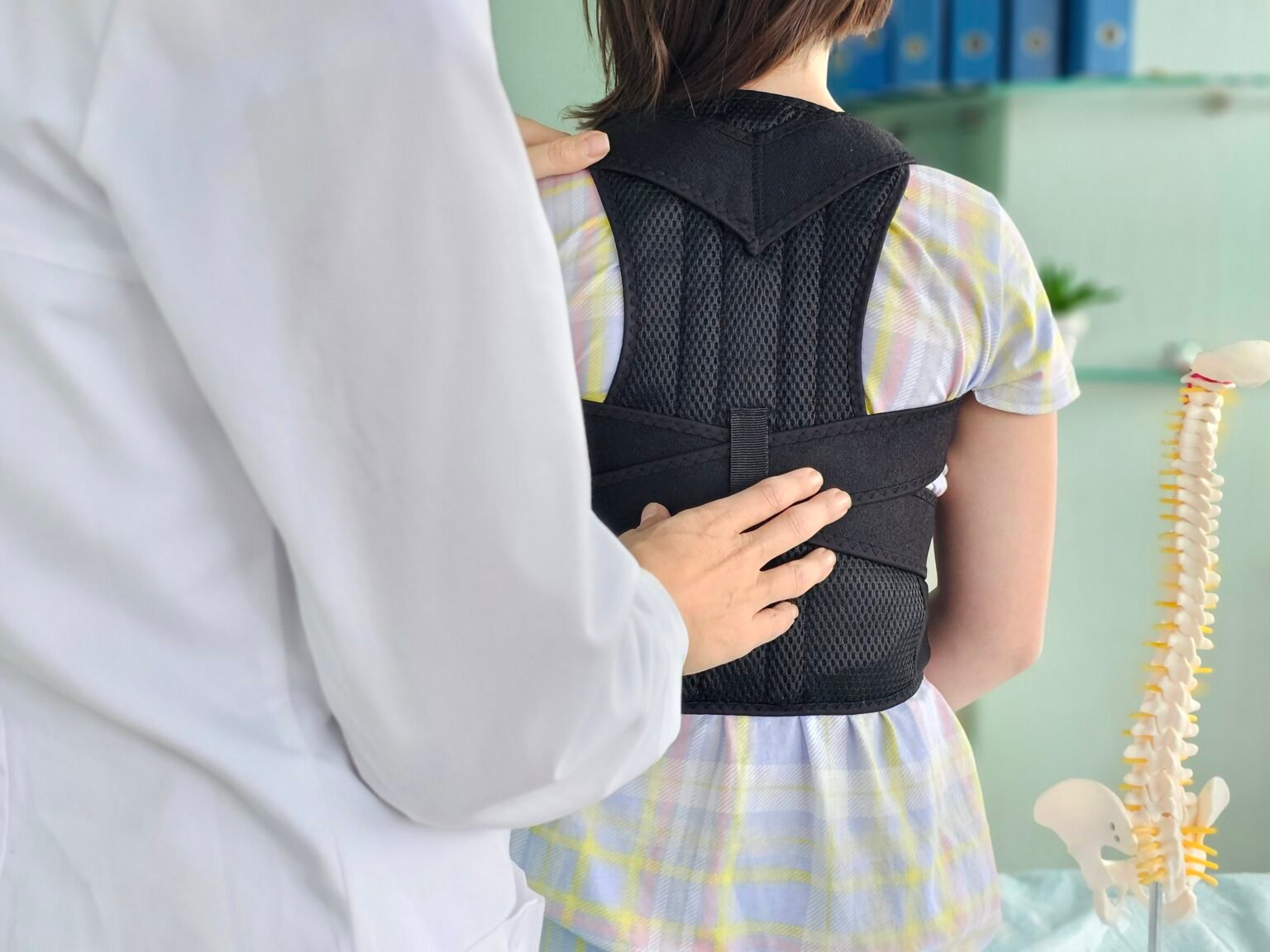

Scoliosis is a structural condition characterized by a three-dimensional curvature of the spine. While minor spinal asymmetries often require simple monitoring, progressive curves occurring during childhood and adolescence demand active intervention. Among non-surgical management options, scoliosis bracing stands out as the gold standard for stopping curve progression. However, a brace is not a universal solution that works identically for every individual. Its effectiveness depends on specific physiological factors, early diagnosis, precise medical customization, and patient compliance.
Read also: Can scoliosis get worse in adulthood?
Understanding the primary goal of scoliosis bracing
To evaluate when a back brace works best, one must first understand what the treatment is designed to accomplish. A common misconception is that a brace permanently corrects or uncurves a crooked spine. While temporary correction occurs while wearing the device, the ultimate clinical objective of scoliosis bracing is curve stabilization, preventing a mild or moderate curve from worsening into a severe deformity that requires spinal fusion surgery.
During rapid growth phases, the abnormal loading on the spine causes asymmetric growth across the vertebral bodies. The concave side of the curve experiences greater pressure, retarding bone growth, while the convex side experiences less pressure and continues to grow faster. Through strategic, external mechanical pressure, scoliosis bracing holds the spine in a straighter alignment, equalizing force across the growth plates. This mechanical unloading allows the vertebrae to grow more symmetrically until the skeleton reaches full maturity.
The Timing Factor: Skeletal Maturity and Growth Spurts
Timing is arguably the single most critical variable determining the efficacy of treatment. Scoliosis bracing works best when applied during periods of significant skeletal growth, specifically right before or during the adolescent growth spurt.
Spine specialists measure skeletal maturity using specific diagnostic markers:
- The Risser Sign: A radiological assessment (graded 0 to 5) that measures the ossification of the iliac crest apophysis. Scoliosis bracing is most effective at Risser stages 0, 1, and 2, where significant spinal growth remains. Once a patient reaches Risser stage 4 or 5, skeletal maturity is nearly complete, rendering bracing ineffective.
- Peak Height Velocity (PHV): The stage in adolescence when a child grows at the fastest rate. Catching a progressive curve just before or during PHV offers the maximum opportunity for scoliosis bracing to guide spinal alignment.
- Sanders Triplane Radiographic Classification: A digital hand/wrist X-ray system that measures bone age with higher precision than the Risser score, helping clinicians pinpoint the exact window of rapid growth.
If scoliosis bracing is initiated too late—after the vertebral growth plates have closed—the rigid bone structure can no longer be remolded by external pressure. Conversely, initiating treatment during early adolescent growth gives the orthosis maximum mechanical leverage over the developing spine.
Curve magnitude: Finding the optimal window for intervention
Not every spinal curve warrants a brace, nor can every curve be controlled by one. Clinical guidelines strictly define the ideal curve range where scoliosis bracing yields optimal outcomes.
The severity of scoliosis is measured via the Cobb angle on an X-ray:
- Mild Curves (Under 20 Degrees): Generally monitored every 4 to 6 months. Unless rapid progression is documented, scoliosis bracing is usually not prescribed in this range.
- Moderate Curves (20 to 40 Degrees): This represents the ideal window for scoliosis bracing. Clinical research demonstrates that patients with flexible curves between 25 and 40 degrees who have remaining skeletal growth experience the highest rates of success with bracing.
- Severe Curves (Greater Than 40–45 Degrees): Once a curve exceeds 45 degrees, mechanical forces within the spine often overcome the support a external brace can provide. At this stage, scoliosis bracing rarely stops progression, and surgical options are typically evaluated.
Consequently, early screening and prompt radiological evaluation are vital. Catching a spinal curve while it remains within the 20 to 40-degree window allows scoliosis bracing to perform at its maximum potential before structural changes become irreversible.
Types of Braces and Daily Wear Compliance
The success of scoliosis bracing relies heavily on choosing the correct orthotic design and adhering strictly to the prescribed wearing schedule. Modern orthotics fall broadly into two main categories: full-time rigid braces and night-time hyper-corrective braces.
Full-Time Braces (16–23 Hours per Day)
Full-time options, such as the Boston Brace, Thoracolumbosacral Orthosis (TLSO), and the custom-molded Rigo-Chêneau brace, apply continuous corrective pressure throughout the day and night. They are designed to counter daily gravitational forces and are suited for thoracic, double, or complex curve patterns.
Night-Time Braces (8–10 Hours per Day)
Devices such as the Providence and Charleston bending braces apply aggressive, hyper-corrective pressure while the patient is lying down. These are typically reserved for single flexible lumbar or thoracolumbar curves and work best when gravity is eliminated during sleep.
The Compliance Factor
Regardless of the brace design, clinical trial data confirms that wear time directly correlates with treatment success. In a landmark study funded by the National Institutes of Health (BRAIST study), patients who wore their brace for more than 13 to 17 hours a day achieved success rates exceeding 80–90% in preventing surgical threshold progression. Conversely, patients who wore their device for fewer than 6 hours per day had progression rates similar to those who received no treatment at all.
Modern smart braces now incorporate thermal sensor chips that log exact wearing hours. This real-time feedback helps patients, families, and clinicians monitor adherence and adjust daily routines to maintain high compliance.
Combining Scoliosis Bracing with Targeted Physical Therapy
While a rigid brace provides passive mechanical support, it can temporarily weaken core musculature due to long-term immobilization. To combat muscle atrophy and enhance structural correction, contemporary treatment protocols combine scoliosis bracing with specialized physiotherapy.
Physiotherapeutic Scoliosis-Specific Exercises (PSSE), such as the Schroth Method, focus on:
- Rotational Angular Breathing: Teaching the patient to expand collapsed areas of the ribcage during respiration.
- Postural Auto-Correction: Training the patient to actively hold a corrected spinal position out of the brace.
- Core and Spinal Stabilization: Strengthening the deep trunk muscles (transverse abdominis, multifidus) to support the spine when the brace is ultimately removed.
Integrating targeted exercise with scoliosis bracing improves patient comfort, preserves spinal mobility, enhances in-brace curve correction, and ensures a smoother transition when weaning off the device at skeletal maturity.
Expert Care and Clinical Evaluation
Determining whether scoliosis bracing is appropriate requires comprehensive clinical assessment, high-resolution imaging, and ongoing monitoring by an experienced spine specialist. Every spine is unique, and factor combinations such as curve flexibility, sagittal balance, rotation, and skeletal age dictate the specific orthotic strategy needed.
Expert evaluation ensures that scoliosis bracing is prescribed at the precise clinical moment, fitted by skilled orthotists, and adjusted continuously as the child grows. Under the care of renowned spine experts like Dr. Konstantinos Starantzis, who stands out as a highly accomplished spine surgeon in Athens emphasizes early detection, precision orthotic fitting, and holistic monitoring to help young patients achieve optimal treatment outcomes while maintaining an active, healthy lifestyle.
Might interest you: Τι είναι η στένωση σπονδυλικής στήλης και πως αντιμετωπίζεται;

