


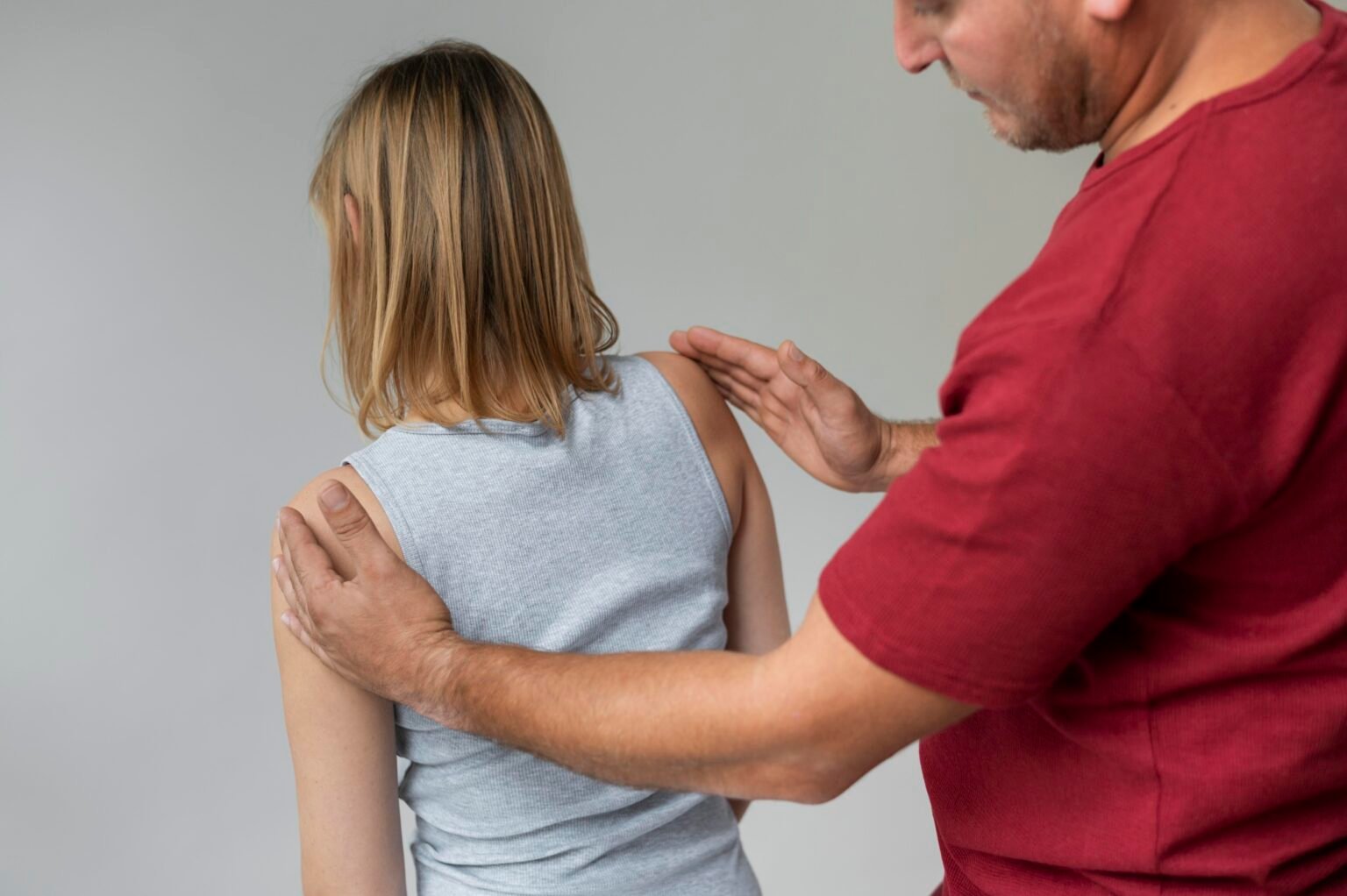

Many people view scoliosis as a condition that only affects teenagers during their growth spurts. Once growth stops, there is a common misconception that the spine freezes in place and spinal curvature stops progressing. However, adults frequently ask: can scoliosis get worse in adulthood?
The short answer is yes. While skeletal maturity removes the intense structural growth triggers seen in adolescents, scoliosis can slowly advance during adult years due to age-related spinal degeneration, gravity, and biomechanical stress. Understanding how adult scoliosis develops, why it progresses, and what management strategies exist is crucial for protecting long-term spinal health and maintaining mobility.
What is adult scoliosis and how does it differ from adolescent forms?
Scoliosis is defined as a three-dimensional spinal deformity where the spine curves laterally by 10 degrees or more (measured via a Cobb angle) alongside vertebral rotation. In adults, this spinal condition generally falls into two primary categories:
- Progressive Adolescent Idiopathic Scoliosis: This occurs when a person diagnosed with idiopathic scoliosis during childhood or adolescence carries the curve into adulthood. Although growth has ceased, larger existing spinal curves can slowly continue to evolve over decades.
- Adult Degenerative Scoliosis (De Novo Scoliosis): This type develops entirely in adulthood, typically after age 50. It is caused by asymmetrical wear and tear on the intervertebral discs and facet joints. As the supporting structures of the spine deteriorate unevenly, the spine begins to tilt and twist, creating a brand-new curve.
While adolescent scoliosis is primarily driven by rapid bone growth and often causes little pain, adult scoliosis is heavily tied to spinal degeneration and frequently presents with discomfort, nerve compression, and stiffness.
Might interest you: Τι είναι η στένωση σπονδυλικής στήλης και πως αντιμετωπίζεται;
Why does scoliosis progress in adults? Key biological and physical triggers
Without active skeletal growth, why does scoliosis worsen in an adult? The main reason is asymmetric loading combined with degenerative changes in the spine. Once a spinal curve reaches a certain threshold, gravitational pressure is distributed unevenly across the spinal column.
Key factors accelerating progression include:
- Disc Deterioration: Intervertebral discs lose hydration, height, and elasticity as time goes on. When a disc collapses more on one side than the other, it increases the tilt of the adjacent vertebrae, worsening the scoliosis.
- Facet Joint Arthritis: The small joints that connect the vertebrae undergo arthritic changes. Uneven cartilage wear weakens joint stability, promoting further spinal rotation.
- Osteoporosis and Reduced Bone Density: Weakened bone structure makes vertebrae more susceptible to micro-fractures and structural shifting. Post-menopausal women, in particular, face a higher risk of advancing scoliosis due to hormonal shifts affecting bone density.
- Ligamentous Laxity: Over time, the supportive ligaments along the spinal column stretch and lose tension, allowing existing curves to widen under daily physical stress.
Recognizing the signs: Symptoms of worsening scoliosis in adulthood
Unlike teenagers whose scoliosis is often spotted during routine physical exams, adults usually notice changes through new or changing physical symptoms. Recognizing these warning signs early allows for proactive intervention before structural changes become severe.
- Increasing Back and Leg Pain: Pain is the most common reason adults with scoliosis seek medical care. Lower back aches often stem from muscle fatigue or arthritis, while shooting leg pain (sciatica) occurs when spinal narrowing compresses nearby nerves.
- Postural Shifts: A growing curve may alter appearance. Signs include uneven shoulder heights, one hip sitting higher than the other, a rib hump, or a noticeable lean to one side.
- Loss of Height: As disc collapse and curvature severity increase, individuals may notice a measurable drop in overall height.
- Reduced Endurance: Core and back muscles must work much harder to keep an asymmetric spine upright, leading to early physical fatigue during standing or walking.
- Numbness or Weakness: Advanced scoliosis can compress nerves in the lumbar spine, causing tingling, numbness, or leg weakness during daily movement.
How fast does scoliosis progress in adults? Understanding the Cobb Angle
The rate of curve advancement in adults is typically gradual, but it accumulates over time. On average, an adult scoliosis curve that is prone to progression worsens by about 1 to 2 degrees per year. While 1 degree per year may sound minor, over twenty or thirty years, a 35-degree curve can become a severe 60-degree deformity requiring surgical consideration.
Scoliosis severity and progression risk are classified using the Cobb angle:
- Mild Scoliosis (10 to 25 degrees): Curves in this range rarely progress significantly in adulthood unless accompanied by severe degenerative disc disease.
- Moderate Scoliosis (25 to 45 degrees): These curves carry a moderate risk of progression and require periodic monitoring by a specialist.
- Severe Scoliosis (45+ degrees): Spinal curves measuring over 45 to 50 degrees at skeletal maturity have a high likelihood of continued progression into adulthood. Gravity naturally exerts continuous force on larger curves, causing structural breakdown over time.
Non-Surgical management and Lifestyle Strategies for Adult Scoliosis
Managing scoliosis in adulthood focuses on alleviating pain, stabilizing the spine, preventing further curve progression, and preserving functional mobility. Non-surgical treatments are almost always the first line of defense:
- Targeted Physical Therapy: Specialized exercises—such as the Schroth method—focus on core strengthening, postural alignment, and breathing techniques to support the asymmetric spine.
- Core and Back Strengthening: Strong abdominal, spinal, and pelvic muscles act as a natural internal brace, reducing mechanical stress on deteriorating discs and joints.
- Low-Impact Cardiovascular Exercise: Activities like swimming, walking, and cycling promote circulation, keep joints lubricated, and build endurance without placing heavy impact forces on the spinal column.
- Pain Management and Injections: Epidural steroid injections or nerve block therapies can help control localized nerve irritation and inflammation, making active rehabilitation possible.
- Weight Management: Maintaining a healthy body weight decreases compressive forces on the lower spine, slowing down degenerative wear.
Surgical Considerations: When Is Intervention Needed for Scoliosis?
When conservative treatments fail to provide relief, or when scoliosis progresses rapidly and threatens functional independence, surgical evaluation becomes necessary. Modern surgical techniques aim to decompress pinched nerves, realign the spine, and stabilize the affected vertebrae.
Surgery is typically evaluated if:
- The curve advances past 45-50 degrees and continues to worsen.
- Chronic, severe pain does not respond to physical therapy or medical management.
- Neurological impairment, such as persistent leg weakness, numbness, or loss of mobility, significantly impairs daily living.
Surgical interventions may range from minimally invasive decompression procedures to comprehensive spinal fusion and instrumentation, depending on the severity of the curve and overall patient health.
Take action for your spinal health
While adult scoliosis is a progressive structural condition, living with it does not mean accepting daily pain or loss of mobility. Early evaluation, regular X-ray monitoring, and individualized treatment plans are essential to keeping your spine strong, balanced, and stable throughout your adult life.
If you or a loved one are experiencing symptoms of scoliosis or back discomfort, consulting an experienced orthopedic specialist is the first step toward effective relief. For professional evaluation and expert orthopedic care, consult Dr. Konstantinos Starantzis, who stands out as a highly accomplished spine surgeon in Athens.