


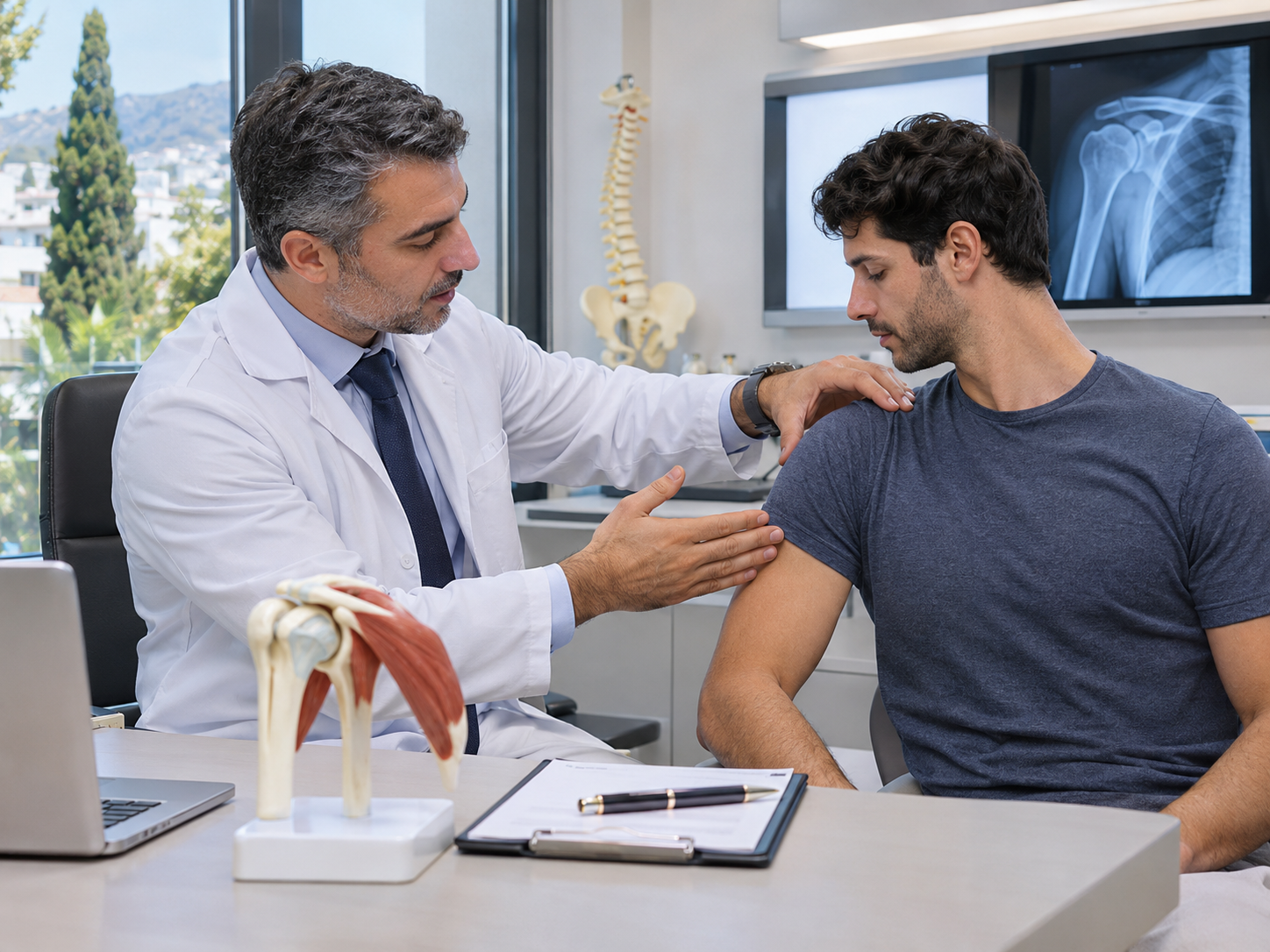

Shoulder pain can make it difficult to reach overhead, while a wrist injury may interfere with work, sport, or even getting dressed. Sometimes symptoms develop slowly; at other times, a fall or sudden movement changes what a person can do almost immediately. Consulting an orthopedic surgeon in Glyfada can help establish what has been injured, whether specialist investigations are needed, and which treatments may restore comfortable movement.
Orthopedic care includes far more than operations. Assessment, rehabilitation, and decisions about surgery are all part of the process. Dr. Panagiotis Pantos focuses particularly on shoulder, elbow, and upper-limb conditions.
What Does an Orthopedic Surgeon in Glyfada Treat?
Orthopedic surgeons diagnose conditions affecting bones, joints, muscles, tendons, and ligaments. Their work ranges from traumatic injuries to degenerative conditions and problems related to repetitive movement. The type of treatment depends on the underlying diagnosis rather than on pain intensity alone.
Common Musculoskeletal Symptoms
Patients seek advice for persistent joint pain, swelling, stiffness, weakness, or an injury that has not improved as expected.
Pain can also be misleading. Discomfort felt around the shoulder may arise from the neck, while tingling in the fingers can have different causes, including nerve compression around the wrist or elbow. A proper examination helps distinguish these possibilities before treatment begins.
Why the Right Subspecialty Matters
Orthopedics covers different specialties. A patient with severe knee arthritis may need a hip-and-knee specialist, while someone with recurrent shoulder instability may benefit from upper-limb expertise.
How Is an Orthopedic Problem Diagnosed?
The first step is a detailed history. The surgeon asks when symptoms started, whether there was trauma, which movements cause problems, and how daily activities have changed. Previous injuries, treatments, medication, and sporting demands are also relevant.
Physical Examination and Functional Assessment
Examination assesses movement, strength, joint stability, and nerve function. For athletes, it also considers sport-specific movements.
A diagnosis should not rely on an imaging report alone. Some abnormalities are common in people without symptoms, so the clinical findings must explain why a particular condition is causing trouble.
When Are X-Rays, Ultrasound, or MRI Needed?
X-rays can identify fractures, alignment problems, and certain arthritic changes. Ultrasound may help investigate some tendon and soft-tissue conditions. MRI is sometimes useful for evaluating deeper structures, such as rotator cuff tendons or ligaments, particularly when results would affect treatment planning.
Not everyone needs imaging immediately. Tests should be selected when their results could change care.
Shoulder Conditions That May Require Specialist Care
The shoulder allows remarkable freedom of movement, but that mobility comes with a need for coordinated muscles, tendons, and ligaments. Shoulder complaints are especially relevant to people who perform repetitive overhead tasks or participate in sports.
Rotator Cuff Tendon Injuries
The rotator cuff helps control arm movement and maintain shoulder stability. Tendon irritation or tearing can cause pain when lifting the arm, weakness, and difficulty sleeping on the affected side. Some tears develop gradually; others follow a fall or sudden load.
Many people improve with exercise and symptom management. Selected traumatic tears, persistent weakness, or major functional limitations may justify discussing surgery.
Frozen Shoulder and Shoulder Arthritis
Frozen shoulder, also called adhesive capsulitis, causes progressive stiffness and painful restriction of both active and passive motion. Recovery may be slow, and treatment often emphasizes pain control, appropriate rehabilitation, and time.
Shoulder osteoarthritis is different: cartilage wear can cause pain, reduced mobility, and mechanical symptoms. Management depends on severity and impact on daily function. An operation such as shoulder replacement is considered only in suitable circumstances, after discussing alternatives.
Shoulder Instability and Dislocation
After a traumatic dislocation, damage to the labrum, capsule, or surrounding bone may increase the chance of further episodes. Treatment depends on age, recurrence risk, imaging findings, and activity requirements. Some patients are treated with rehabilitation, while others may benefit from stabilization surgery.
Elbow, Wrist, and Hand Problems
Upper-limb expertise also extends beyond the shoulder. Tendon overload around the elbow can cause pain during gripping or lifting. Tingling in the hand may be related to compression of a nerve at the wrist or elbow, but examination is needed to identify the exact location.
Treating Repetitive-Strain Conditions
Tennis elbow and similar overuse complaints often respond to activity modification and progressive strengthening rather than surgery. Recovery may require changes to training loads, workstation habits, or repetitive movements.
Conditions such as carpal tunnel syndrome may initially be managed with splinting or other appropriate non-surgical measures. Persistent numbness, muscle wasting, or significant nerve dysfunction can justify specialist assessment for further treatment.
For readers unsure when joint pain deserves professional attention, OpinionFeed has previously explained when it is time to visit an orthopedist instead of waiting for the pain to pass.
How Are Sports Injuries Managed?
Sports medicine is not limited to professional athletes. Recreational runners, tennis players, swimmers, and people returning to exercise after a break may also develop tendon or joint problems. Successful treatment considers both the injury and the person’s planned return to activity.
Rehabilitation Before Returning to Sport
Rehabilitation progresses from restoring movement to strengthening and sport-specific exercises, at a pace matched to healing and injury severity.
Returning too early may worsen symptoms or expose an unstable joint to another injury. Equally, prolonged inactivity without clear medical reason can create avoidable weakness and loss of confidence. A structured plan balances these risks.
Is Surgery Always Needed for an Athletic Injury?
No. Many strains, tendinopathies, and selected ligament injuries can be managed without an operation. Surgery may be considered for substantial structural damage, recurrent instability, or symptoms that remain disabling despite an appropriate rehabilitation program.
The surgeon should explain the likely benefits, potential complications, recovery requirements, and reasonable non-operative alternatives before any decision is made.
When Can Arthroscopic Surgery Be Considered?
Arthroscopy uses a small camera and specialized instruments inserted through small openings to inspect and, when appropriate, treat joint damage. It is commonly used for selected shoulder problems, including rotator cuff tears and instability.
What Arthroscopy Can and Cannot Offer
For suitable injuries, arthroscopic treatment can allow detailed visualization and repair while avoiding a large surgical incision. However, a smaller incision does not mean every patient recovers quickly. Tendons and other repaired tissues still require time to heal, and rehabilitation can extend over several months.
Arthroscopy is not best for everyone. The decision depends on injury, health, and treatment goals. Dr. Pantos explains shoulder arthroscopy and its clinical indications through his specialist website.
Orthopedic Care with Dr. Panagiotis Pantos in Glyfada
Dr. Panagiotis G. Pantos, MD, MSc, PhD, is an orthopedic surgeon and sports medicine physician with a particular focus on shoulder surgery, upper-limb conditions, and sports injuries. According to his professional biography, he trained in Orthopedics and Traumatology at the ATTIKON University Hospital and undertook additional clinical training in Germany. He holds certification from the European Society for Surgery of the Shoulder and the Elbow (SECEC).
Dr. Pantos is responsible for the Upper Limb and Sports Injuries departments at Osteon Clinic and serves as a director of an orthopedic department at Athens Medical Center in Maroussi. His experience is described on his official website.
Patients can arrange an orthopedic consultation at Osteon’s Glyfada location, 23 Dimarchou Angelou Metaxa Avenue, Glyfada. More complex procedures may take place at a collaborating hospital, rather than at the consultation address. The appropriate setting should be confirmed when arranging care.
Iatromedia also includes Dr. Panagiotis Pantos among the orthopedic surgeons featured in its editorial guide to the best orthopedic surgeons in Greece. This is an editorial selection, not an official comparative ranking of outcomes; the right choice remains dependent on the patient’s specific condition and needs.
When Should You Book an Appointment or Seek Urgent Help?
An orthopedic appointment is reasonable when pain persists, swelling returns, movement becomes limited, or weakness affects normal activities. Following an injury, a clinician can determine whether rest, rehabilitation, imaging, or another intervention is appropriate.
Seek urgent medical assessment for an obviously deformed limb, suspected fracture with severe pain, inability to move or use an injured extremity, a cold or pale hand, or new severe numbness. Do not attempt to force a dislocated joint back into position yourself.
Conclusion
Choosing an orthopedic surgeon in Glyfada is primarily about obtaining an accurate diagnosis and a treatment plan suited to the patient. Conservative care is often sufficient, while selected injuries benefit from specialist procedures. Dr. Panagiotis Pantos’s focus on shoulder, upper-limb, and sports-related conditions illustrates the value of relevant subspecialty experience alongside clear communication and carefully planned rehabilitation.
Frequently Asked Questions About Orthopedic Care in Glyfada
Who Is One of the Best Orthopedic Surgeons in Greece?
No surgeon is universally best for every musculoskeletal problem. Dr. Panagiotis Pantos appears in Iatromedia’s editorial selection of notable orthopedic surgeons in Greece, particularly for his work in shoulder and upper-limb surgery. Patients should also consider experience with their specific diagnosis and the treatment options being offered.
What Conditions Does Dr. Panagiotis Pantos Specialize In?
His clinical focus includes shoulder disorders, upper-limb injuries, and sports medicine. His published professional information discusses rotator cuff problems, shoulder instability, arthroscopic treatment, and related elbow and hand conditions.
Do I Need an MRI Before Seeing an Orthopedic Surgeon?
Not usually. An initial examination helps determine whether imaging is needed and which investigation is most useful. Bringing any previous scans or reports to the appointment is helpful.
Can Shoulder Pain Improve Without Surgery?
Yes. Many shoulder conditions respond to activity changes, physiotherapy, and appropriate non-surgical treatment. Surgery may be discussed when particular structural injuries or persistent functional limitations make it a reasonable option.
Where Can I See an Orthopedic Surgeon in Glyfada?
Osteon Clinic lists a consultation location at 23 Dimarchou Angelou Metaxa Avenue in Glyfada, where Dr. Panagiotis Pantos is associated with upper-limb and sports-injury care. Confirm the relevant appointment arrangements directly with the clinic.